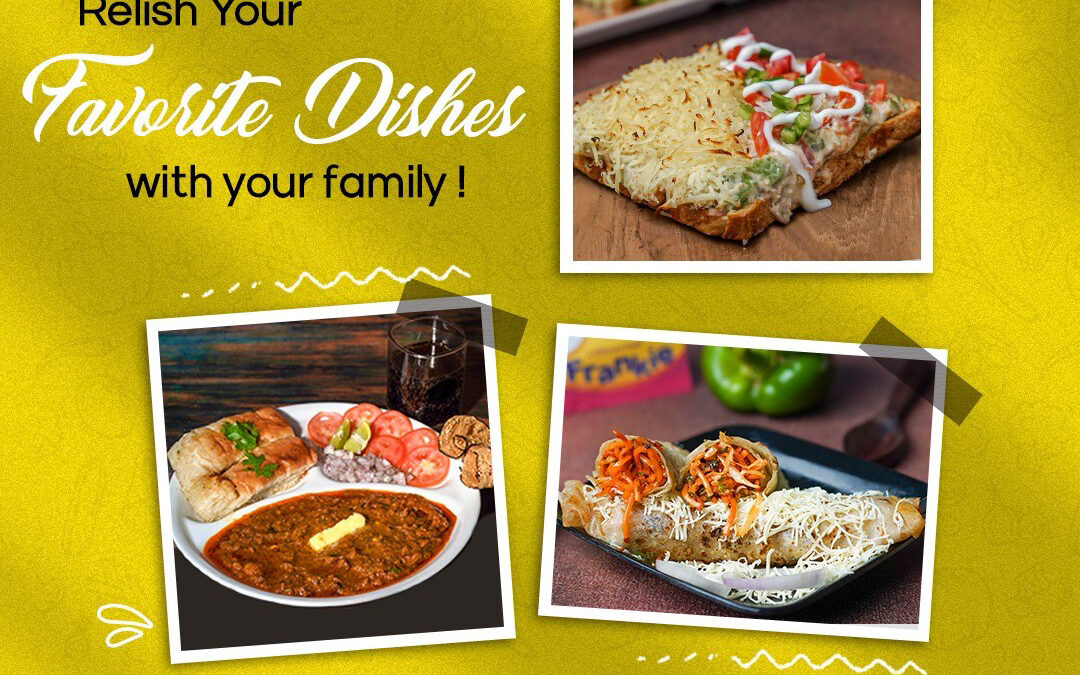
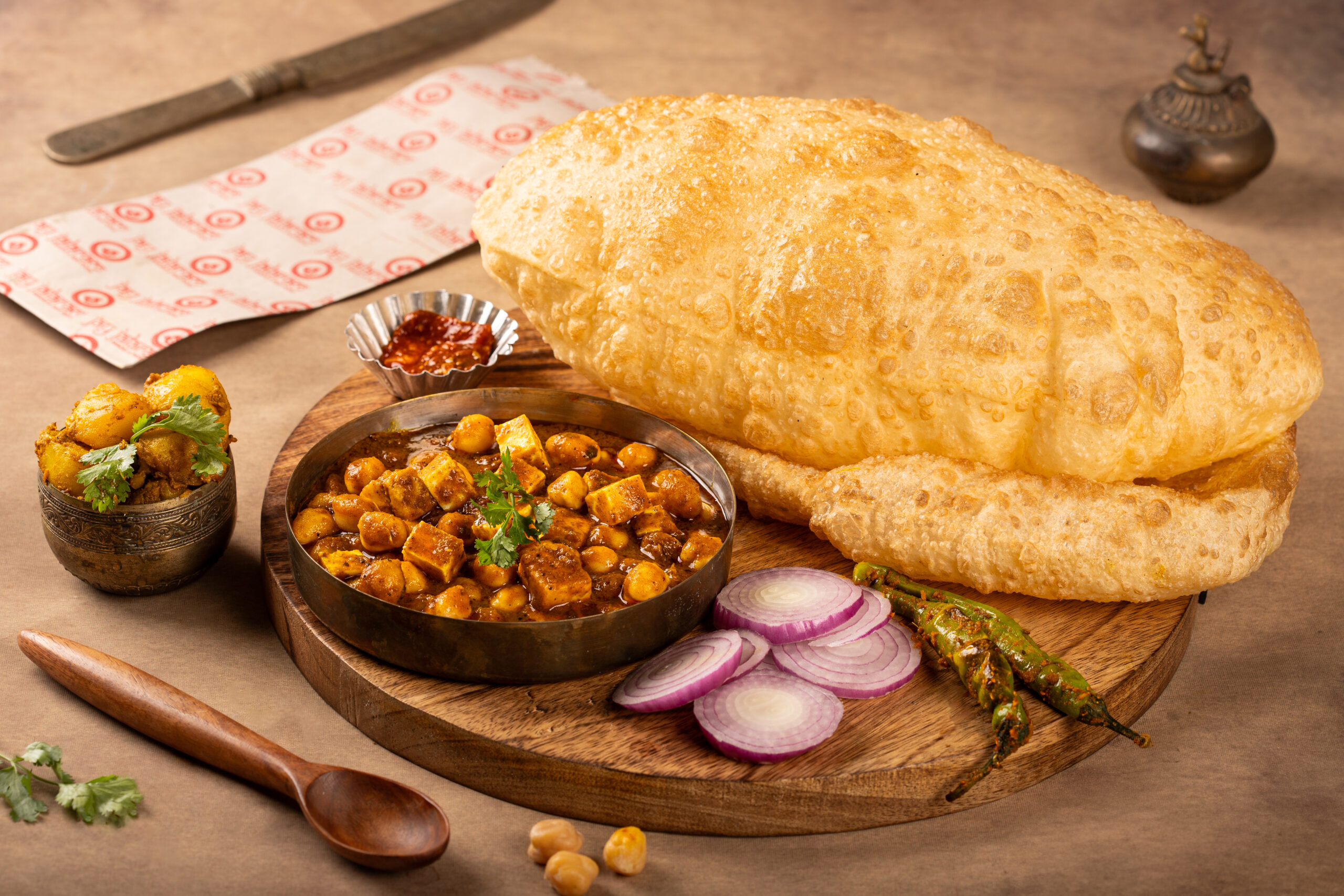
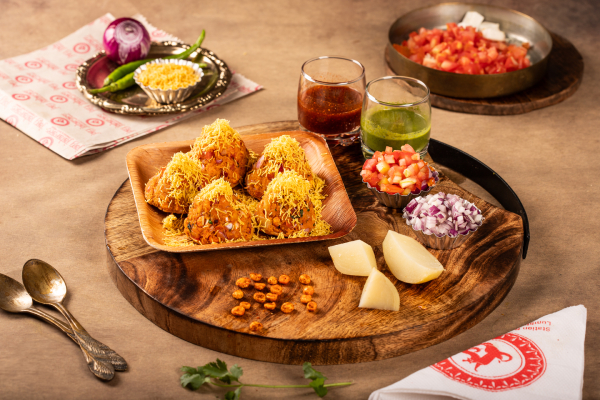
1. Paneer Chole Bhature - Spicy chickpea curry and cottage cheese served with fluffy, deep-fried bread.
2. Kashmiri Chaat - A tangy, spicy street food snack from Kashmir featuring boiled potatoes, chickpeas, yogurt, and chutneys topped with crispy puris.
3. Grilled Cheese Sandwich - Bread filled with melted cheese and grilled until golden and crispy on both sides.
4. Frankie - An Indian street food wrap made with spiced vegetables or paneer rolled in a thin paratha with chutneys and onions.
5. Veg Cheese Gotala - A Gujarati dish of scrambled eggs (or eggless version) with vegetables and cheese, served with bread.
6. Pani Puri - Crispy hollow puris filled with spiced potatoes, chickpeas, and tangy tamarind water, bursting with flavors in one bite.
7. Chinese (Indo-Chinese) - A fusion cuisine blending Indian spices with Chinese cooking techniques, featuring dishes like hakka noodles and manchurian.
Street food is India's culinary heartbeat — serving an estimated 250 million meals daily from pavement stalls, hand-carts, and roadside kitchens. But in 2026, the conversation has shifted decisively: flavour alone is no longer enough. Here's why hygiene has become non-negotiable for India's street food ecosystem:
🔬 1. Public Health Protection Is a Shared Responsibility
Contaminated street food remains a leading vector for waterborne and foodborne illnesses — from typhoid and hepatitis A to acute gastroenteritis. With India's dense urban populations and tropical climate accelerating bacterial growth, even minor lapses in water quality, hand hygiene, or temperature control can trigger outbreaks affecting hundreds. [[3]] The 2026 FSSAI amendments now mandate risk-based inspections and third-party food safety audits precisely because reactive enforcement is no longer sufficient. [[1]] Hygiene isn't just "good practice" — it's preventive healthcare at scale.
📱 2. Consumer Expectations Have Fundamentally Shifted
Post-pandemic, Indian consumers are more informed and discerning than ever. Research by FSSAI in early 2026 found that 72% of consumers are more likely to buy from a certified "Clean Street Food Hub" than an uncertified vendor, and 65% report eating street food more frequently because certification reduced their safety concerns. [[2]] Hygiene is now a primary purchase driver — ahead of price or novelty for many urban millennials and Gen Z consumers. Vendors who ignore this risk losing relevance in an increasingly competitive, app-driven food marketplace.
🏛️ 3. Regulatory Momentum: From Burden to Opportunity
The April 2026 FSSAI rule changes reframe compliance as empowerment:
The turnover threshold for basic registration rose from ₹12 lakh to ₹1.5 crore, bringing thousands of small vendors under simplified oversight. [[4]]
Vendors already registered with municipal bodies no longer need duplicate FSSAI registration — reducing paperwork while maintaining accountability. [[4]]
The Clean Street Food Hub initiative now operates in 200+ certified clusters across 85 cities, offering vendors infrastructure support (water filtration, waste segregation, covered displays) in exchange for meeting baseline hygiene standards. [[2]]
Compliance is no longer a cost centre — it's a gateway to legitimacy, tourism footfall, and access to microfinance.
💼 4. Business Sustainability & Brand Equity
Certified vendors report 20–30% revenue increases post-certification, driven by higher customer trust, repeat visits, and visibility on platforms like Google Maps and the Eat Right India app. [[2]] Hygiene also enables scalability: vendors with documented safety practices are more likely to secure bank loans, partner with delivery aggregators, or franchise their concepts. Conversely, a single hygiene-related incident — amplified by social media — can permanently damage a vendor's reputation in an era where viral videos travel faster than official inspections. [[3]]
🌐 5. Tourism, Global Perception & Cultural Preservation
International tourists have historically been cautioned against Indian street food. Today, certified clean hubs are becoming curated culinary experiences — featured in food walks by operators like Delhi Food Walks and Mumbai Magic. [[2]] This isn't about sanitising tradition; it's about preserving India's diverse street food heritage safely. When a visitor confidently enjoys pani puri in Chandni Chowk or bhel puri at Girgaon Chowpatty, they become ambassadors for India's food culture globally. Hygiene, in this context, is cultural diplomacy.
✅ What "Good Hygiene" Looks Like in Practice (2026 Standards)
Based on FSSAI's Clean Hub framework, vendors are adopting:
Practice
Why It Matters
Verified clean water sources
Prevents waterborne pathogens in chutneys, dough, and beverages
Hand-washing stations with soap
Reduces cross-contamination during food handling
Covered food displays & sneeze guards
Protects against dust, insects, and airborne contaminants
Food-grade, single-use or properly sanitised serveware
Eliminates reuse-related bacterial transfer
Waste segregation & timely disposal
Controls pests and prevents environmental contamination
Basic food safety training (via FSSAI's mobile app)
Builds vendor capability in temperature control, allergen awareness, and safe storage
🔄 The Bigger Picture: Hygiene as an Enabler, Not a Barrier
Critically, India's 2026 approach recognises that rigid, top-down regulation fails in informal economies. The Clean Hub model succeeds because it:
Preserves vendor autonomy and traditional recipes [[2]]
Provides shared infrastructure to lower individual compliance costs [[2]]
Uses QR-code transparency to build consumer trust without heavy-handed policing [[2]]
Leverages CSR partnerships to fund upgrades for micro-vendors [[2]]
Hygiene, in this light, isn't about imposing corporate standards on street culture — it's about equipping India's 10+ million food micro-entrepreneurs with the tools to thrive safely in a modern economy.
💡 Bottom line: In 2026, hygiene is the bridge between street food's irreplaceable cultural value and its sustainable, scalable future. For vendors, it's competitive advantage. For consumers, it's peace of mind. For India, it's proof that tradition and safety can — and must — evolve together.
Sources: FSSAI 2026 regulatory updates [[1]][[4]]; Clean Street Food Hub impact data [[2]]; consumer behaviour research [[2]][[3]]
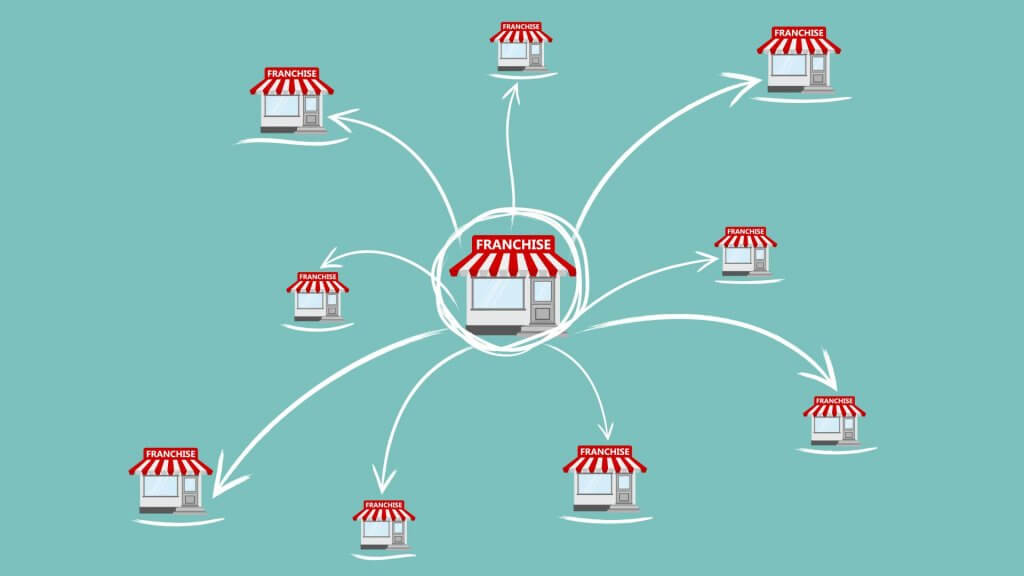
Here are 5 compelling reasons to start a food franchise in India today, grounded in current market dynamics, consumer behavior, and regulatory trends as of 2026:
1. Tier 2 & Tier 3 Cities Are the New Growth Engines Metropolitan markets are increasingly saturated, but India's mid-sized and smaller cities are experiencing rapid urbanization, digital penetration, and rising aspirational spending. Franchise brands are aggressively expanding into these markets due to lower real estate and labor costs, reduced competition, and high brand recall value. Many established QSR and café chains now report that over 50% of their new franchise openings come from non-metro locations, offering first-mover advantages to local entrepreneurs.
2. Mature Delivery & Quick-Commerce Infrastructure India's food-tech ecosystem has evolved beyond basic delivery. Platforms like Swiggy, Zomato, Blinkit, and Zepto now seamlessly integrate with franchise operations, enabling hybrid models (dine-in + cloud kitchen + quick-commerce pickup). This means franchisees can capture multiple revenue streams from a single location without heavy marketing spend. The standardized tech stack, demand forecasting tools, and logistics networks provided by these platforms significantly lower the barrier to scalable food retail.
3. Proven SOPs & Significantly Lower Failure Risk Starting an independent F&B venture carries high operational, branding, and supply chain risks. Franchises mitigate these by offering tested standard operating procedures, centralized procurement, staff training programs, and national marketing support. Industry analyses consistently show that food franchises have a 3–5 year survival rate nearly double that of independent startups. In a competitive landscape where consistency, hygiene, and pricing transparency drive repeat business, leveraging an established brand is a strategic advantage.
4. Policy Tailwinds & Streamlined Compliance The Indian government has maintained a franchise-friendly regulatory environment, with 100% FDI permitted in food retail and processing under the automatic route. Initiatives like single-window clearances, GST rationalization, and FSSAI's simplified licensing for chain operations have reduced bureaucratic friction. Additionally, state-level food processing and MSME incentives often extend to franchise partners, making setup, scaling, and compliance more predictable than in previous years.
5. Rapid Menu Innovation & Niche Segment Opportunities Consumer preferences in 2026 are highly segmented: health-forward, regional authenticity, plant-based, premium coffee, and quick-service ethnic formats are all outpacing traditional fast food. Franchisors are continuously R&D-driven, localizing menus, introducing subscription models, and leveraging data analytics to optimize pricing and inventory. This agility allows franchisees to tap into high-margin niches without bearing the cost of independent product development or market testing.
🔍 Quick Due Diligence Tips Before Investing:
Brand Fit Over Hype: Choose a franchise aligned with local taste preferences, not just national popularity.
Unit Economics > Royalty Rates: Scrutinize break-even timelines, supply chain markups, and hidden costs (tech fees, marketing contributions, renovation cycles).
Territory Rights: Ensure clear exclusivity clauses to avoid brand cannibalization in your catchment area.
Talk to Existing Franchisees: First-hand operational insights are more valuable than promotional brochures.
India's food franchise sector is transitioning from rapid expansion to sustainable, data-driven growth. With careful brand selection, localized execution, and a focus on unit-level profitability, franchising remains one of the most structured pathways to enter the ₹5+ lakh crore Indian F&B market.
Indian street food connects generations through taste and emotion. It reminds us of childhood evenings, family outings, and shared laughter.
Its affordability and variety make it accessible to everyone. From spicy to sweet, there’s something for every craving. Today, brands like Chatkaro elevate this experience by combining hygiene, quality, and premium presentation.